Cookie Preferences



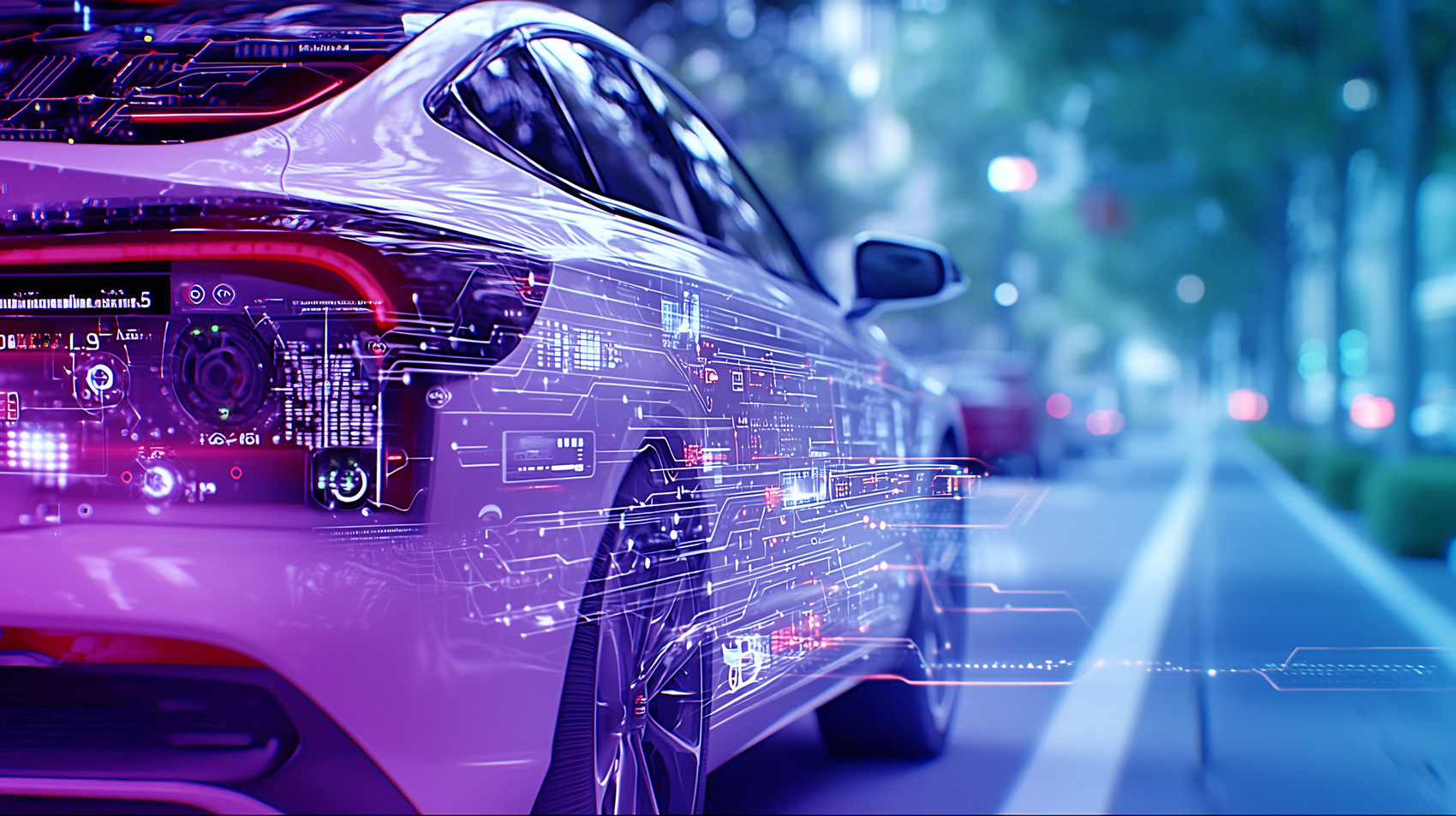
Today, your vehicle may power your home during the next power outage, have a built-in grill, allow you to play video games while waiting in the car, adjust a vehicle fragrance based on your preference, or park itself in tight spaces. Someone else’s vehicle may even be able to drive you to your destination. These examples show how advances in both hardware and software can be used to deliver features that were once part of imagination.
Automotive OEMs are clearly looking for new ways to add value beyond traditional concerns such as improved fuel consumption or vehicle handling. The vision is to expand beyond just the driving experience to impact other aspects of a user’s life. Toyota Motor Co. Chairman Akio Toyoda recently went so far as to say that Toyota intends to create “happiness for all.”
The automotive industry’s traditional emphasis on hardware is being complemented by a growing software focus. The first place this was seen was in navigation; navigation apps and tools are now universally defined and standard in vehicles. The next stage of development is centered around personalization, as each person may have a different expectation of how their vehicle should work and how they want to use their vehicle. This comes in the form of customizing both the driver and passenger experiences.
One focus of customized experience involves information and entertainment – infotainment.
Traditionally, vehicle information was displayed using a combination of mechanical gauges, lighted buttons, and limited digital displays. Today, digital displays have come to dominate how vehicle information is displayed. These may include separate displays in the dashboard and center console, an elongated display across the entire dashboard from pillar to pillar, or even a projected display on some portion of the windshield.
Beyond typical use cases, displays are now used in new places to add value. Take for example a digital rearview mirror connected to a back-up camera to help when your full trunk blocks your view, or even displays on the side-view mirrors to help with blind spot monitoring. Auto OEMs are now trying to find the best way to integrate these new technologies to improve safety and enrich the driving experience. For example, some OEMs (e.g., GM and Rivian) are developing their own infotainment software systems, some are partially integrating with mobile devices (e.g. Ford and Toyota), while others are pursuing tighter integration with mobile devices (e.g. Aston Martin, Hyundai).
Across the industry these efforts are still at relatively early stages of development, and progress is fitful. Even luxury vehicles can be prone to issues.
The challenges involve the delivery, exchange, discovery, and presentation of data through the growing number of connected technologies, screens, and other information access points in modern vehicles. These challenges are daunting and shared with many other industries, including manufacturing, consumer electronics, communication, and media. Despite such challenges, some of these industries have flourished and provided an intuitive and seamless user experience delighting their customers. Many of these companies are household names that leverage Adeia's innovation, supported by a global patent portfolio of nearly 14,000 patent assets.
Adeia has assembled a diverse team of data scientists, psychologists, and engineers to tackle challenges related to automobiles and redefine future vehicle technologies. Whether solutions for conventional navigation features such as algorithms to optimize trip refueling or minimally disruptive latent route guidance, AI-enabled safety features such as aggressive driver alerts or gaze-based content journaling to keep a driver’s eyes back on the road, connected technology features such as embedding vehicle induced screen effects to a phone to minimize passenger motion sickness, or enabling hardware technologies such as polarizing windshield filters to reduce incoming high beam lights or mems-based displays to keep distracting video content out of a drivers view. These few examples from Adeia’s portfolio are highlighted to show how Adeia is working to define the automotive experience of tomorrow leveraging the diverse background of our team.
.jpg)
Dr. Danny J. Lohan is a staff engineer at Adeia where he works to solve challenges for next generation transportation systems. Prior to joining Adeia, Dr. Lohan was a Sr Scientist at the Toyota Research Institute of North America, where he also worked at the forefront of scientific research for next generation automobiles. He received his PhD in Systems and Entrepreneurial Engineering from the University of Illinois at Urbana-Champaign with a research focus on design automation technologies. His fundamental and applied research has been recognized both in over 39 peer-reviewed international scientific publications and several featured magazine articles targeted at engineering practitioners. Dr. Lohan’s research efforts have materialized into practical solutions which are now protected in over 33 granted patents with several dozen more applications under review.
%20(1).png)
%20(2).png)
© 2026 Adeia Inc. All Rights Reserved |
Terms & Conditions |
Privacy Statement|
Accessibility
