
Cookie Preferences




NeurIPS 2025 delivered what is now expected of the world’s most influential AI research conference. scale, rigor, and a clearer picture of where AI is heading. The event showcased breakthroughs in foundation models, reinforcement learning, and agentic systems—along with a growing focus on controllability and compute constraints.
This recap highlights the themes that mattered most from Adeia’s perspective.
NeurIPS 2025 featured a dual-city format and record participation. This year’s split between San Diego and Mexico City created a globally accessible event with sold-out attendance and a massive volume of cutting-edge research spanning orals, posters, workshops, tutorials, and demos.
The mission of NeurIPS is evolving in an era of scaling limits. The conversation is shifting from “make models bigger” to “make models more predictable, efficient, and controllable.” This shift was visible throughout the conference.
Researchers introduced new attention mechanisms, including gated attention architectures. Award-winning work introduced a gated attention architecture that improves stability and performance in large language models.
Diffusion model advances and award‑winning theoretical work further pushed the field forward. Diffusion modeling continued to evolve, with new theoretical insights expanding its relevance across modalities.
Researchers also focused on the problem of diversity collapse in large language[ET1.1] models. Research revealed concerning trends such as increasingly homogeneous outputs across more than 70 tested models, highlighting how models can converge toward similar answers and lose expressive range over time.
Test‑time optimization techniques, such as speculative decoding, are accelerating inference performance. Techniques like ATLAS, a dynamic speculation framework, demonstrated how inference speed can be dramatically accelerated.
Sparse and adaptive model architectures emerged as promising pathways toward more efficient computation. Sparse compute and adaptive compute allocation were prominent themes for reducing the cost of large models.
Researchers highlighted innovations in large‑scale training and improved GPU utilization. Techniques such as fault-tolerant distributed training using idle GPU capacity highlighted the urgency of overcoming compute scarcity.
Researchers explored extremely deep networks, uncovering new insights into goal‑reaching tasks. Research showcased stable and effective training of extremely deep, thousand-layer architectures for RL tasks.
Offline reinforcement learning (RL) advances demonstrated stronger performance on heterogeneous data. New methods showed promising improvements in handling diverse datasets and personalizing agent behaviors.
Findings clarified why RL improves consistency without automatically enhancing reasoning. Findings showed that RL improves output consistency but does not automatically grant new reasoning capabilities to base models.
Major tech companies showcased compelling demonstrations of agentic AI systems. Google’s MOMENTUM agent, Meta’s DINO V3 multimodal advances, and other projects highlighted a shift toward applied, workflow-centric AI.
Advances in robotics, multimodal understanding, and infrastructure were on full display. Demonstrations included Tesla’s Optimus humanoid robot prototype, NVIDIA’s next-gen compute infrastructure, and Cerebras’ wafer-scale AI compute.
Financial firms made a strong showing as they continued to compete for AI talent. Quantitative finance firms actively recruited researchers and showcased AI applications in trading, modeling, and risk management[NX2.1].
Researchers emphasized the need for improved predictability, controllability, and evaluation beyond accuracy. Researchers emphasized the need to evaluate models on robustness, diversity, and drift—not just accuracy.
Discussions centered on the importance of diversity, robustness, and open‑ended benchmarks. Datasets designed for open-ended tasks reveal subtle failure modes not captured by standard metrics.
AI agents and multimodal workflows were highlighted as significant near‑term opportunities. Video understanding, multimedia generation, and agentic orchestration are emerging as practical, high-impact applications.
These trends carry important practical implications for media, search, and content understanding. Agentic and multimodal systems open new opportunities for smarter metadata, workflow automation, and content intelligence.
Efficiency and model behavior research remain core areas of interest for Adeia. Efficiency is a product requirement for real-world deployments involving large-scale media and content applications.
Looking ahead to 2026, several trends will be critical to watch. Key trends include predictable model behavior, efficient inference, and robust multimodal agents.
Foundation models, efficiency, synthetic-data robustness, reinforcement learning, diffusion theory, and agentic AI dominated this year’s conference.
Increasing compute costs have driven heavy interest in sparse compute, speculative decoding, and resilient distributed training.
Demonstrations pointed toward applied agentic systems, multimodal understanding, robotics, and next-generation compute infrastructure.

Ning Xu currently serves as Sr. Fellow of Advanced R&D at Adeia Inc, pioneering innovations that enhance how we live, work, and play. Before joining Adeia, Dr. Xu was the Chief Scientist of Video Algorithms at Kuaishou Technology and led an R&D lab in its US R&D Center. Prior to that, he held various positions at Amazon, Snap Research, Dolby Laboratories, and Samsung Research America. He earned his Ph.D. in Electrical Engineering from the University of Illinois at Urbana-Champaign (UIUC) in 2005. Dr. Xu has co-authored over 200 journal articles, conference papers, patents, and patent applications. His research interests encompass machine learning, computer vision, video technology, and other related areas.
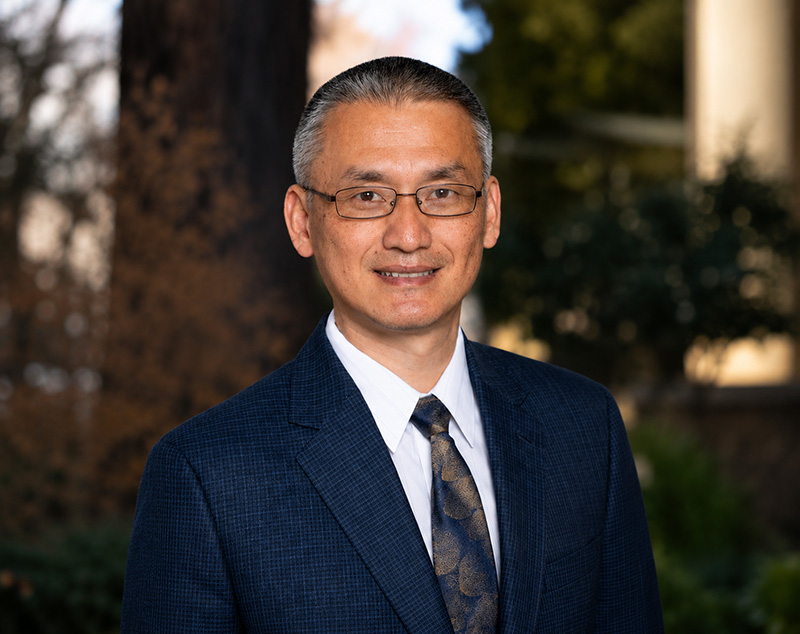
Ning Xu currently serves as Sr. Fellow of Advanced R&D at Adeia Inc, pioneering innovations that enhance how we live, work, and play. Before joining Adeia, Dr. Xu was the Chief Scientist of Video Algorithms at Kuaishou Technology and led an R&D lab in its US R&D Center. Prior to that, he held various positions at Amazon, Snap Research, Dolby Laboratories, and Samsung Research America. He earned his Ph.D. in Electrical Engineering from the University of Illinois at Urbana-Champaign (UIUC) in 2005. Dr. Xu has co-authored over 200 journal articles, conference papers, patents, and patent applications. His research interests encompass machine learning, computer vision, video technology, and other related areas.
%20(1).png)
%20(2).png)
© 2026 Adeia Inc. All Rights Reserved |
Terms & Conditions |
Privacy Statement|
Accessibility
