



Cookie Preferences




Designed for AI accelerators, high-performance computing (HPC), and advanced data center architectures, the RapidCool thermal solution can achieve approximately a 70% reduction in thermal resistance by eliminating conventional thermal interface materials (TIMs) and bonding a silicon microchannel cold plate directly to the backside of the chip. This direct silicon-to-silicon thermal pathway enables more efficient heat transfer and improved cooling performance for increasingly power-dense semiconductor architectures.
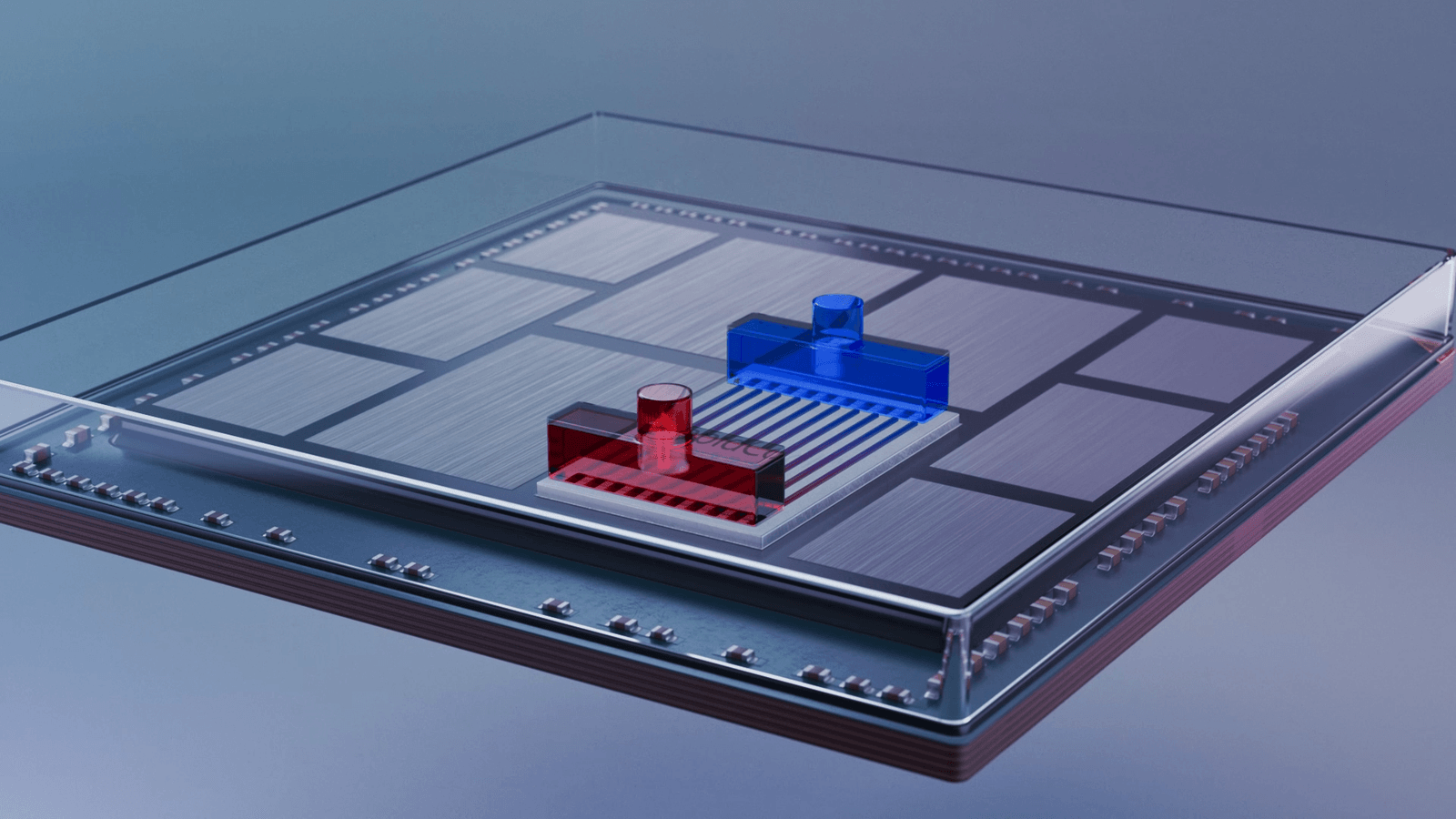
The RapidCool thermal solution utilizes integrated silicon microchannel cooling technology with engineered manifold architectures designed to optimize coolant flow, thermal resistance, pressure drop, and overall system efficiency. Unlike the original microchannel approach that etch microchannels into the die surface, Adeia's architecture bonds the cold plate directly to the integrated circuit, creating face-down, closed microchannels adjacent to the chip surface for more efficient thermal extraction and improved integration reliability.
The RapidCool thermal solution has demonstrated cooling capabilities exceeding 5 W/mm² and has experimentally achieved cooling performance approximately 3x higher than conventional TIM-based cold plate solutions, while operating at comparatively low coolant flow rates. Adeia’s thermal design and computational fluid dynamics (CFD) modeling approach also enables customization for non-uniform chip heatmaps and localized hotspot management — increasingly critical for AI and HPC processors where power densities vary significantly across the die.
As semiconductor power densities continue to increase from today’s typical ranges toward 3–5 W/mm² and beyond, thermal management has become a primary system-level constraint. Conventional cold-plate cooling technologies are approaching their physical limits due to the thermal bottlenecks introduced by TIM layers, package warpage, and interface inefficiencies. The RapidCool thermal solution addresses these limitations through direct-bonded silicon cooling architectures that reduce thermal resistance while maintaining compatibility with existing liquid cooling infrastructure and data center deployment models.
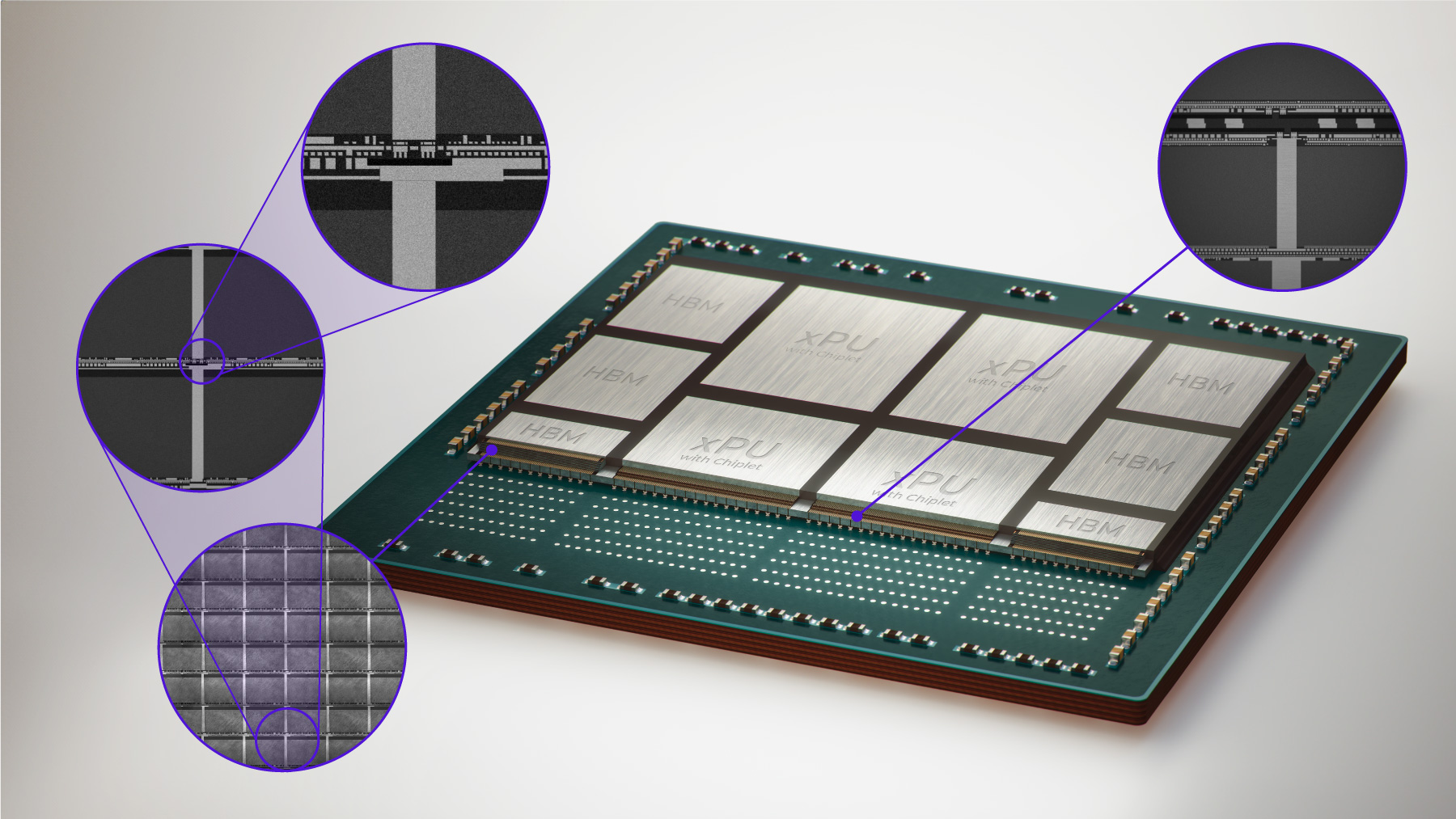
Adeia’s modular cooling architecture is also designed to align with existing advanced semiconductor packaging and manufacturing ecosystems, including 2.5D and heterogeneous integration flows used in advanced HPC modules. The RapidCool thermal solution supports emerging backside power delivery architectures, vertically stacked devices, and future multi-reticle package designs, while enabling scalable integration across advanced packaging supply chains.
The RapidCool thermal solution is complementary to Adeia’s hybrid bonding technologies. Hybrid bonding reduces thermal resistance across die-to-die interfaces while enabling higher interconnect densities and more efficient heterogeneous integration. Together, Adeia’s bonding and thermal technologies support improved electrical performance, thermal efficiency, hotspot management, and system scalability for next-generation semiconductor platforms.
Purpose-built for AI infrastructure, HPC systems, advanced logic, and high-bandwidth memory environments, the RapidCool thermal solution enables semiconductor and system architects to address the thermal demands of future computing platforms while supporting continued performance scaling and improved data center energy efficiency.



%20(1).png)
%20(2).png)
© 2026 Adeia Inc. All Rights Reserved |
Terms & Conditions |
Privacy Statement|
Accessibility
